
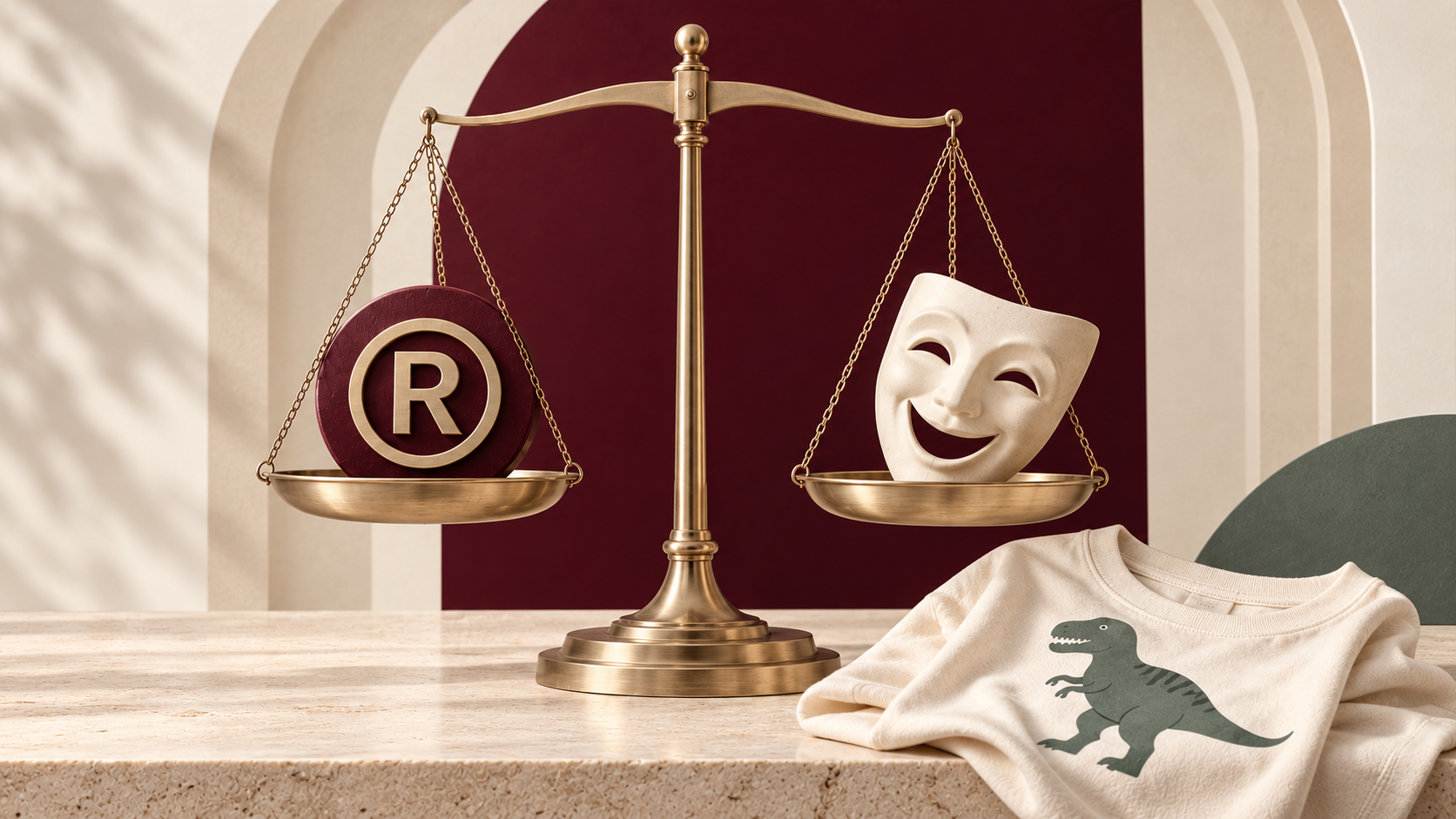
A parody of Zorro in a commercial. A political parody of the Ikea logo, including on social media. Satirical merchandise: the Lacoste crocodile transformed into a dinosaur on T-shirts. Record labels reworked for satirical effect. A parody meme of a luxury brand used to launch an ice cream flavour or a new toy. Do these amount to counterfeiting? Do they constitute trademark infringement?
The growing use of other parties’ trademarks for parody is increasingly likely to clash with trademark protection. This stems both from the evolution of trademarks beyond their traditional function of identifying the origin of goods or services into tools of communication, conveying associations and information about a brand, including for advertising purposes, and from the expansion of forms of parody and channels of dissemination in the digital age.
Fair use—the lawful use of another party’s trademark for satire or parody—lies at the intersection, and potential collision, of creativity and commerce: the trademark proprietor’s property rights and the third party’s freedom of expression.
The Judgment of the Court of Justice of the European Union
In its eagerly awaited judgment of 8 September 2026 in Case C-298/23, Inter IKEA Systems BV v Algemeen Vlaams Belang VZW, ECLI:EU:C:2026:721, the Grand Chamber of the Court of Justice of the European Union addressed the conditions for applying the rules on “due cause” (fair use exemption), particularly in relation to trademarks with a reputation. These marks enjoy greater recognition and, as such, carry strong symbolic, social and cultural significance for the public.
In simple terms, the question addressed by the Court was whether the use of another party’s reputed trademark for parody could constitute a defence to trademark infringement.
“Due Cause” and the Protection of Trademarks with a Reputation
The Court observed that EU law—Article 9(2)(c) of Regulation (EU) 2017/1001 and Article 10(2)(c) of Directive (EU) 2015/2436—and the corresponding Italian provision, Article 20(1)(c) of the Industrial Property Code (Legislative Decree No 30/2005, the “IPC”), prohibit the use, without due cause, of a sign similar to a trademark with a reputation where that use takes unfair advantage of, or is detrimental to, the distinctive character or reputation of the trademark.
Due cause, if established, therefore constitutes a defence that excludes trademark infringement.
From this perspective, bringing parody within the concept of due cause requires a balance between competing interests: on the one hand, the trademark proprietor’s interest in safeguarding the functions of the mark; on the other, the third party’s freedom of artistic expression.
If freedom of expression prevails, the use of another party’s trademark for parody is lawful.
The Decisive Factors Identified by the Court
In practical terms, according to the Court, the following factors are decisive in successfully defending against an allegation of trademark infringement on the basis that freedom of expression should prevail:
- The third party’s intention and good faith. An intention to harm the trademark or to free-ride on its reputation cannot fall within fair use.
- Whether the use of the sign similar to the reputed trademark is strictly commercial. This distinction affects the scope of protection: use outside the commercial sphere may benefit from broader protection of freedom of artistic expression, which may prevail over trademark protection.
- The consequences for the trademark proprietor. Decisive considerations include the intensity, reach and manner of the use for parody, the degree of recognition of the other party’s trademark, and the degree of similarity between the sign used in the parody and the trademark. The proprietor cannot be required to tolerate use that is disproportionate to the expressive objective or that undermines the very substance of the exclusive trademark right.
- The nature of parody or satire as a form of artistic expression.
Conclusions: Where Does Fair Use Stand?
The other party’s sign must be used in a clearly satirical or parodic manner, so as to rule out any likelihood of confusion. It must not harm the distinctive character of the reputed trademark—through dilution, erosion or blurring—or damage its reputation through tarnishment or degradation.
More generally, an unfair advantage arises whenever the use of an identical or similar sign allows the imitator’s goods or services to free-ride on the image and reputation associated with the imitated trademark.
The assessment remains case-specific and requires the assistance of a legal professional.
This content is for information only and does not replace legal advice relating to a specific matter.